

Futures...for Us? pt2 Inspiration
The Inspiration behind Communal Heirlooms / La Inspiración para Reliquias Comunales
☀️🌤️
Sunny / soleado 14c
Communal Heirlooms / Reliquias Comunales
Part 2 : Inspiration / Inspiración
Hi all,
I’m going to use some upcoming Tuesday “Futures…for” posts to unpack the collaborative project Communal Heirloom that I introduced last week. This is part 2 of I don’t know how many. We’ll see. A consequence of my commitment to daily creation is thinking in public.
There were three quotes in my introduction which all deserve time to explore one by one. I’ll start today with the quote that inspired me in the first place. It’s from a wonderful talk by Bina Venkataraman at the Long Now Foundation about her book, The Optimist’s Telescope.
Voy a utilizar algunas de las próximas publicaciones de los martes «Futuros... para» para desglosar el proyecto colaborativo Communal Heirloom que presenté la semana pasada. Esta es la segunda parte de no sé cuántas. Ya veremos. Una consecuencia de mi compromiso con la creación diaria es pensar en público.
En mi introducción había tres citas que merecen ser analizadas una por una. Hoy empezaré con la cita que me inspiró en primer lugar. Es de una maravillosa charla de Bina Venkataraman en la Long Now Foundation sobre su libro, The Optimist’s Telescope.
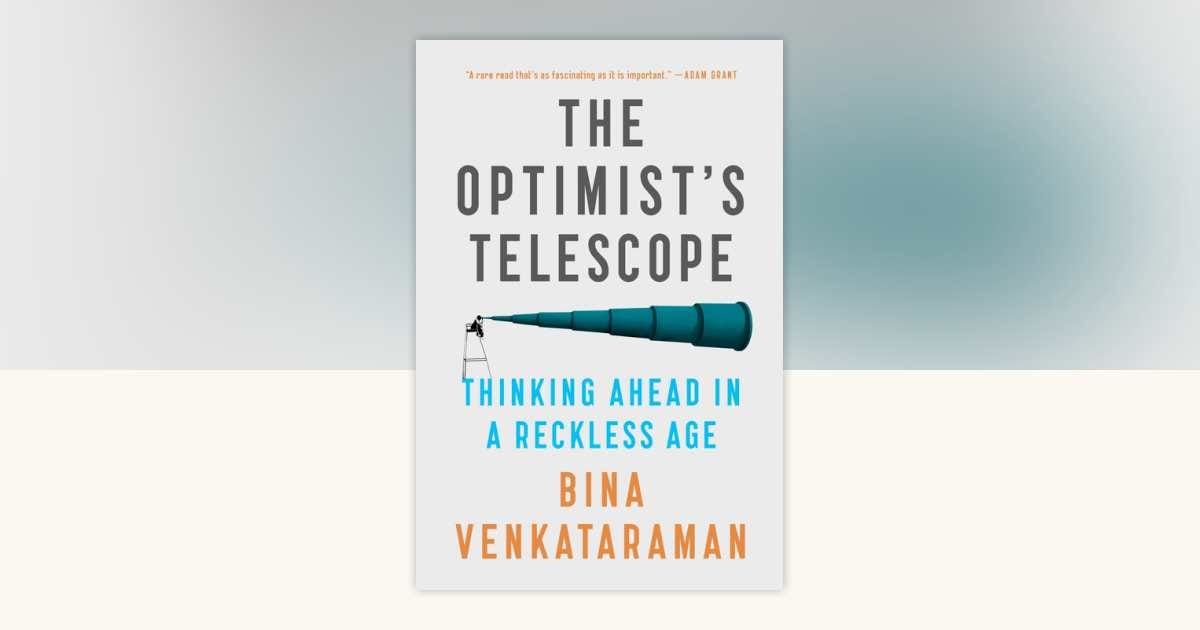
The full video, if you’d like to watch her great talk.
Summary from Long Now Foundation YouTube post:
“What does practical long-term thinking look like? Bina Venkataraman’s new book, The Optimist's Telescope: Thinking Ahead in a Reckless Age, brings this abstract question to life. Through a series of anecdotes and case studies that draw from her background in public policy, climate change strategy, and journalism, Venkataraman explores pragmatic tactics that can help us think more clearly about our long-term future. / ¿Cómo es el pensamiento práctico a largo plazo? El nuevo libro de Bina Venkataraman, The Optimist’s Telescope: Thinking Ahead in a Reckless Age (El telescopio del optimista: pensar en el futuro en una era imprudente), da vida a esta pregunta abstracta. A través de una serie de anécdotas y estudios de casos que se basan en su experiencia en políticas públicas, estrategias contra el cambio climático y periodismo, Venkataraman explora tácticas pragmáticas que pueden ayudarnos a pensar con mayor claridad sobre nuestro futuro a largo plazo.”
Why does this matter? Why now? / ¿Por qué es importante? ¿Por qué ahora?
Amara’s law says, “We tend to overestimate the effect of a technology in the short run and underestimate the effect in the long run.” This is not a new behavior. Amara’s law was coined in 1978! So, we are prone to ignoring future consequences (e.g., climate change, overfishing, personal health delays). Part of this is due to a focus on immediate gains, creating our “reckless age,” says Venkataraman. We see this all the time and of course, these days with AI, generative AI, and especially Artificial General Intelligence (AGI) - forecasted to exceed our cognitive abilities whilst consuming vast quantities of resources.
La ley de Amara dice: «Tendemos a sobreestimar el efecto de una tecnología a corto plazo y a subestimar su efecto a largo plazo». Este no es un comportamiento nuevo. ¡La ley de Amara se acuñó en 1978! Por lo tanto, somos propensos a ignorar las consecuencias futuras (por ejemplo, el cambio climático, la sobrepesca, los retrasos en la salud personal). Según Venkataraman, esto se debe en parte a que nos centramos en las ganancias inmediatas, lo que da lugar a nuestra «era imprudente». Lo vemos constantemente y, por supuesto, hoy en día con la IA, la IA generativa y, especialmente, la inteligencia artificial general (AGI), que se prevé que supere nuestras capacidades cognitivas y consuma grandes cantidades de recursos.
What can we do about it? / ¿Qué Podemos Hacer?
She describes a number of skills and capabilities we can cultivate. Foresight being the primary one - “the ability to imagine and act for desirable futures—through vivid, positive imagination and concrete planning.” She describes a number of specific strategies as well. Which, of course, resonates because that’s what I was doing at the time! Well, that’s what I thought. So, check. Ok, cool. Validation. And it’s generally baked into the activities we’re doing here at FIELD REPORT, with the community at Near Future Lab, in my Sci-Fi book club, with Superfriends Creative Club. Check, check, check.
Ella describe una serie de habilidades y capacidades que podemos cultivar. La principal es la previsión: «la capacidad de imaginar y actuar para lograr un futuro deseable, mediante una imaginación vívida y positiva y una planificación concreta». También describe una serie de estrategias específicas. Lo cual, por supuesto, me resulta familiar, porque eso es lo que yo hacía en aquella época. Bueno, eso es lo que yo pensaba. Así que, comprobado. Vale, genial. Validación. Y, en general, está integrado en las actividades que hacemos aquí en FIELD REPORT, con la comunidad de Near Future Lab, en mi club de lectura de ciencia ficción y con Superfriends Creative Club. Comprobado, comprobado, comprobado.
The quote that inspired me / La cita que me inspiró
An heirloom is something that can be used in one’s own lifetime, an heirloom is something that can be cared for. I play the instrument that I inherited, which is my heirloom, but I’m also protecting it for the future. And that seems to me, a more apt metaphor for the resources we have on the planet, or even what we have in our lives. That we are able to enjoy them and use them for the moment, but also think about them as connected to the future. / Una reliquia es algo que se puede usar durante toda la vida, una reliquia es algo que se puede cuidar. Toco el instrumento que heredé, que es mi reliquia familiar, pero también lo protejo para el futuro. Y eso me parece una metáfora más adecuada para los recursos que tenemos en el planeta, o incluso para lo que tenemos en nuestras vidas. Que podemos disfrutarlos y utilizarlos en el momento, pero también pensar en ellos como algo conectado con el futuro.
About three years prior to this lecture, I had led the final design fiction story for Tomorrow in Progress. A series of creative exercises I led while at IDEO. The final story, The Future for Rent, coincidentally was about a shift from ownership to access and the role of an heirloom! So yeah, neurons were firing.
What Communal Heirlooms does is bring together our rituals of heirlooms, the care of communality, to address our climate crisis. My contribution to this is to create a design challenge, described in the overview slide titled Evolution of the Parts.
Aproximadamente tres años antes de esta conferencia, dirigí la historia final de ficción de diseño para Tomorrow in Progress. Una serie de ejercicios creativos que dirigí mientras trabajaba en IDEO. La historia final, The Future for Rent, casualmente trataba sobre el cambio de la propiedad al acceso y el papel de las reliquias familiares. Así que sí, las neuronas estaban en plena actividad.
Lo que hace Communal Heirlooms es reunir nuestros rituales de reliquias familiares, el cuidado de la comunidad, para abordar nuestra crisis climática. Mi contribución a esto es crear un desafío de diseño, descrito en la diapositiva general titulada Evolution of the Parts (Evolución de las partes).
Possible Parts / Partes Posibles
Outfit community with skills to enable foresights, creative making, economics, ecology, and policy. As well as bring together experts because there are probably a mountain of skills I am overlooking. / Dotar a la comunidad de habilidades que permitan la previsión, la creación creativa, la economía, la ecología y la política. Además, reunir a expertos, ya que probablemente haya una gran cantidad de habilidades que estoy pasando por alto.
Create experiences, like Possibility Hours, to identify heirlooms that do or did exist / Crea experiencias, como las Horas de Posibilidades, para identificar reliquias que existen o existieron.
Conduct experiences, like Possibility Hours, to invent/create heirlooms that did or should exist / Realiza experiencias, como las «Horas de posibilidades», para inventar o crear reliquias que existieron o deberían existir.
Shape governance and experiences that we will use to communally steward these heirlooms for future generations. / Configurar la gobernanza y las experiencias que utilizaremos para administrar colectivamente estos legados para las generaciones futuras.
Co-author Community Guides for the stewardship. / Guías comunitarias de coautoría para la administración.
I’ve synthesized all this into a broader guiding design challenge / He sintetizado todo esto en un reto de diseño orientativo más amplio:
How might we help each other see our way into the future? / ¿Cómo podemos ayudarnos mutuamente a ver nuestro camino hacia el futuro?
An important open-ended phrase in the inspiring quote / Una importante frase abierta en la inspiradora cita:
An heirloom is something that can be cared for…it’s an apt metaphor for the resources we have on the planet, or even what we have in our lives. That we are able to enjoy them and use them for the moment, but also think about them as connected to the future. / Una reliquia familiar es algo que se puede cuidar... Es una metáfora muy acertada para los recursos que tenemos en el planeta, o incluso para lo que tenemos en nuestras vidas. Que podemos disfrutarlos y utilizarlos en el presente, pero también pensar en ellos como algo conectado con el futuro.
- Bina Venkataraman
What we have in our lives / Que tenemos
What comes to mind when you think of things that we can enjoy and use now, but also consider them to be connected to the future? Maybe this is getting ahead of ourselves…because I skipped the outfitting skillbuilding, convening experts step…but this is the question I want to plant in your mind and let it cook.
¿Qué te viene a la mente cuando piensas en cosas que podemos disfrutar y usar ahora, pero que también consideras que están conectadas con el futuro? Quizás esto sea adelantarnos demasiado... porque me salté la parte de desarrollar habilidades, reunir a expertos... pero esta es la pregunta que quiero plantar en tu mente y dejar que madure.
What could be an heirloom? / ¿Qué podría ser una reliquia?
There are resources, on the planet - there are already many organizations, institutions, foundations set up for the purposes of stewarding these…but there is more to be done no doubt. This is not exhaustive, it’s a top of mind list. / Hay recursos en el planeta; ya existen muchas organizaciones, instituciones y fundaciones creadas con el fin de administrarlos... pero sin duda aún queda mucho por hacer. Esta no es una lista exhaustiva, sino una lista de prioridades.
Watersheds, rivers, seas, oceans, lakes, ponds, aquifers, etc
Flora, forests, plants, landscapes, etc
Geologies, rocks, minerals, etc
Air, atmosphere, gases, etc
Fauna, animals, bugs, all living things, etc
What we have in our lives - Good news is that almost everything around us has been designed. Bad news is some of them are working as intended which is benefitting some, usually only a few. It doesn’t need to be this way. I’ve used these four P’s as a useful framing in the past. / Lo que tenemos en nuestras vidas: la buena noticia es que casi todo lo que nos rodea ha sido diseñado. La mala noticia es que algunas cosas funcionan según lo previsto, lo que beneficia a algunos, normalmente solo a unos pocos. No tiene por qué ser así. En el pasado, he utilizado estas cuatro P como un marco útil.
People - can be specific people or the roles they play, the impact they have, the mindset, the perspective…
Places - public or private, like people, the role they play, the impact, the perspective, the ambiance, the persistence…
Products - for this we can embrace less, circularity, re-use, repair and other methods, minds, and perspectives on contributions to our social welfare.
Processes - this part, imho, is the most ripe for change, our learning and understanding and our participation to lead. Below is a starter list.
What are some efficiency improvements that would actually reduce our impact on the planet
What are some innovations that could refocus on designs to improve human and ecological welfare
What is scarce that should be abundant?
What is difficult to build that should be easy?
What inventions do we need that we do not yet have?
What laws, arguments/logics, and customs do we need?
In summary, this quote inspired in me the idea that in our lives are things - heirlooms - that we can steward for future generations as a response to our climate crisis. What are they, how do we steward them? Easy, no? Jaja. Again, a start, as I said. Spending time with each quote, unpacking it a little bit. Ok, that’s it for the inspirational bit.
What I’m realizing is that maybe these posts are the beginning of generating thoughts, mindsets, references, experts and such to create a Primer. Let’s remember our first step is to get Outfitted. Consider this a very rough draft of an upcoming Primer we could engage together in an Outfitting session.
En resumen, esta cita me inspiró la idea de que en nuestras vidas hay cosas —reliquias— que podemos conservar para las generaciones futuras como respuesta a la crisis climática. ¿Cuáles son y cómo las conservamos? Fácil, ¿no? Ja, ja. De nuevo, es un comienzo, como dije. Dedicar tiempo a cada cita, desentrañarla un poco. Bueno, eso es todo por lo que respecta a la parte inspiradora.
Me doy cuenta de que quizá estas publicaciones sean el comienzo de la generación de ideas, mentalidades, referencias, expertos y demás para crear un manual básico. Recordemos que nuestro primer paso es equiparnos. Consideremos esto como un borrador muy preliminar de un próximo manual básico en el que podríamos participar juntos en una sesión de equipamiento.
Thanks for reading / Gracias por leer
Please please please! / ¡Por Favor!
Now is the time to share comments. Please just hit like if you think there is a there there with this Communal Heirloom idea. If you’re more inspired please give me some feedback. I REALLY want to hear from you. Really!! / Ahora es el momento de compartir comentarios. Si crees que esta idea de la reliquia familiar tiene potencial, solo tienes que darle a «Me gusta». Si te sientes más inspirado, por favor, envíame tus comentarios. Tengo MUCHAS ganas de saber tu opinión. ¡De verdad!
A simple feedback method I like to use is GLAD, SAD, ADD. / Un método sencillo de retroalimentación que me gusta utilizar es GLAD, SAD, ADD.
For example:
Glad - what worked, what is resonating, inspiring you? / ¿Qué ha funcionado, qué te está llegando, qué te inspira?
Sad - what isn’t working for you, unclear, confusing, where is this going, why do this? / ¿Qué es lo que no te funciona, lo que no te queda claro, lo que te confunde, hacia dónde va esto, por qué hacerlo?
Add - things to try, to edit, to change, to add, to remove / Cosas que probar, editar, cambiar, añadir, eliminar.
Thank you again / Gracias!
[sgp]
Overview Slides
Possibility Hours : FIELD REPORT
FIELD REPORT is the storytelling channel of Possibility Hours, a creative offering from my company Adventuring Ventures. It began as a podcast, and now a newsletter. FIELD REPORT’s goal is to reframe signals of external changes into opportunities for internal change. I want to harness the abundance of knowledge generated daily to bolster our readiness to change ourselves. FIELD REPORT es el canal narrativo de Possibility Hours, una propuesta creativa de mi empresa Adventuring Ventures. Comenzó como un podcast y ahora es un boletín informativo. El objetivo de FIELD REPORT es replantear las señales de cambios externos como oportunidades para el cambio interno. Quiero aprovechar la abundancia de conocimientos que se generan a diario para reforzar nuestra disposición al cambio.